*This post discuss death and dying
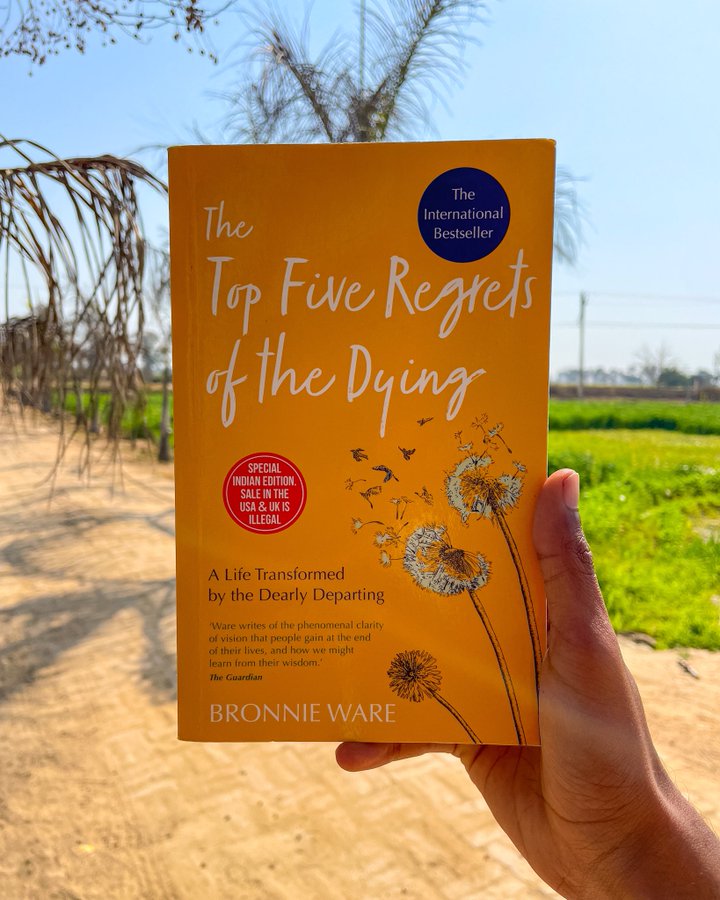
I’ve just finished the audio book – The Top Five Regrets of the Dying, a book published in 2011 after a series of reflective blog posts went viral as they touched a nerve with many all over the world. Part memoir, part philosophical musings, the author, Bronnie Ware, summarises the most common regrets she has heard over a lifetime of being an end-of-life carer. They are:
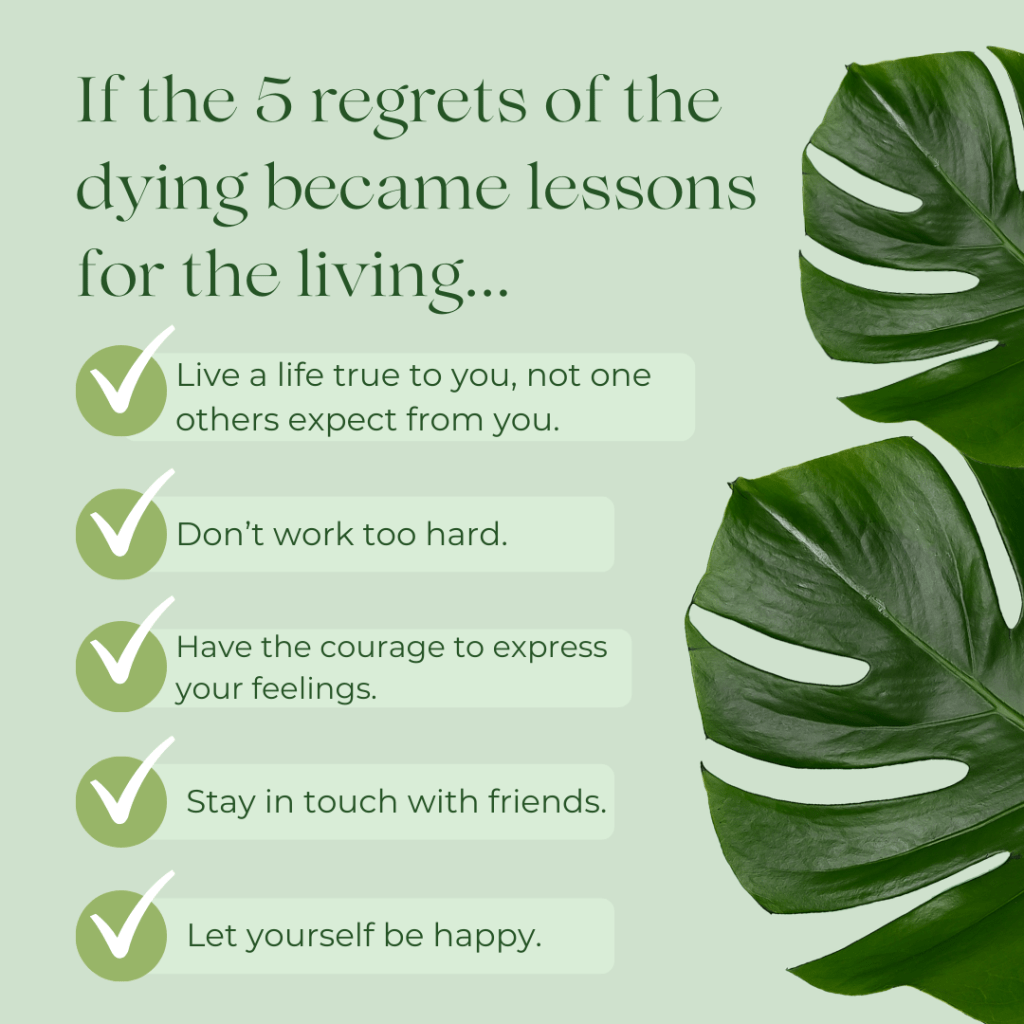
- I wish I’d had the courage to live a life true to myself, not the life others expected of me.
- I wish I hadn’t worked so hard.
- I wish I’d had the courage to express my feelings.
- I wish I had stayed in touch with my friends.
- I wish that I had let myself be happier.
Many of us spend very little time thinking about death and dying, in fact we go to great efforts not to. And if someone does bring up death, we often request them not to ‘ruin the mood’ or ‘be so morbid’. Of course, it’s not an easy subject to embrace and, as a society, we’ve worked hard to hide it away and create a myriad of distractions that capture our attention instead. Which is where Bronnie finds her most regretful patients, the ones that didn’t think about what made an authentic and purposeful life for them until the very end.
I hate to be that person, but we’re all going to die. I know, you’re wincing, it’s painful and heartbreaking and terrifying to think about. But there can also be an exhilarating freedom in imagining how you could live your life as if you were free from the day-to-day life admin and mental stresses and, as Bronnie points out, you don’t want to only think about how you wanted to live your life when it’s too late. She shares the heart-breaking story of one woman, whose ‘tyrant of a husband’ died and she felt free to embrace life on her own terms only to find she was terminally ill within a year of his death. Her regret – leaving it so late to free herself from her unhappy marriage because she put the expectations of others above her own desires.
The funny thing is, by embracing and visualising your last weeks on the planet, you begin to find more meaning and appreciation in daily life. You learn to let the little, insignificant things go…you ask yourself, ‘will I genuinely care about this on my deathbed?’ Bronnie doesn’t seem to have come across someone who wishes they had kept their house tidier or had a nicer car.
One of the most significant things Bronnie talks about is genuine human connection and love and their power to connect you to happiness, even if life throws tough, painful things your way. One of her patients, who had lost two of his children and his wife in mid-life, surprises Bronnie by saying he has a ‘good life.’ When she asks him why he says that, he replies ‘because I’ve known love.’
Bronnie’s own approach to life is very spiritual and adventure-driven. She values her freedom and her identity and expresses genuine love, respect and compassion for all of those she cares for at the end of her life. She makes the point that happiness can be a choice, that each day we can make the conscious effort to find joy and gratitude in the day and that we all deserve to feel happy without feeling guilty.
She concludes the book saying that it is how we live and what we do that matters the most, with a purposeful life and a positive impact bringing the most fulfilment in life. And, if we have regrets or guilt, it is time to be gentle with yourself and make sure the people who need to know how you feel know before it is too late.
As a book, it maybe isn’t the most enthralling or fast-moving and there are passages that seem to go on a bit or feel repetitive, however the learning is transformational and there is lots of wisdom within its pages. Perhaps, instead of regrets, Bronnie could give us all sound advice for living now…
 LucyJayne Counselling
Leave a comment